Showing posts with label South Korea. Show all posts

Wednesday, 2 September 2015

Nami Island, Korea

Forest of Crimson Foliage
21 Apr 2015 | From Akubi of Hong Kong
POSTCROSSING FRIEND

Nami Island is a place that should never ever be left out in your itinerary especially during autumn. Namisum, or Namiseom, is a tiny half-moon shaped island located in Chuncheon, South Korea, formed as it was inundated by the rising water of the North Han River as the result of the construction of Cheongpyeong Dam in 1944. Its name originated from General Nami, who died at the age of 28 after being falsely accused of treason during the reign of King Sejo, the seventh king of the Joseon Dynasty of Korea. 

Namisum is located 3.8 km from Gapyeong County, but belongs to Chuncheon in Gangwon-do. It is 430,000 square meters in area and approximately 4 km in diameter. Nami Island Tree Planting Day was organized so that South East Asian tourists can enjoy the crimson foliage that they cannot see in their own countries. The life energy of spring, the tree shade of summer, the crimson foliage of autumn, bonfires and icicles in the winter - they represent Nami Island's seasonal must-see elements.

Sunday, 9 August 2015

Traditional Women's Hanbok

Women's Hanbok
17 Apr 2015 | From Heo Soo Young of South Korea
POSTCROSSING SWAP (Instagram)

The Hanbok is the traditional outfit of the Korean people. Koreans nowadays wear this outfit only on festive days or special anniversaries.

The women's hanbok usually consists of the jeogori, which is the basic upper garment of hanbok that covers the arms and upper part of the wearer's body, and the chima, a rectangular or tubular skirt with a high, pleated waistband that is tied above the breasts with long sashes. The ensemble is often called chima jeogori. The basic form of a Jeogori consists of gil, git, dongjeong, goreum and sleeves somae.

Traditional Korean Clothing

The Hanbok
17 Apr 2015 | From Heo Soo Young of South Korea
POSTCROSSING SWAP (Instagram)

The Korean hanbok represents one of the most visable aspects of Korean culture. It is the traditional Korean dress, and  often characterized by vibrant colors and simple lines without pockets. Although the term literally means "Korean clothing", hanbok today often refers specifically to clothing of the Joseon period and is worn as semi-formal or formal wear during traditional festivals and celebrations.

Traditional Korean clothing has its roots extending back at least as far as the Three Kingdoms Period (57 B.C. - 668 A.D.), as evidenced by wall paintings in tombs dating from this period. Reflecting its nomadic origins in northern Asia, hanbok was designed to facilitate ease of movement and also incorporated many shamanistic motifs.

Hanbok is classified according to its purposes: everyday dress, ceremonial dress and special dress. Ceremonial dresses are worn on formal occasions, including a child's first birthday, a wedding or a funeral. Special dresses are made for shamans and officials.

Traditional women's hanbok consists of jeogori, a blouse shirt or a jacket and chima, a wrap-around skirt, which is usually worn full. The ensemble is often called chima jeogori. Men's hanbok consists of jeogori and baji which means pants in Korea. The baji were baggy pants in traditional men's hanbok.

Tuesday, 21 April 2015

Merry Christmas from South Korea

Christmas in South Korea
7 Jan 2015 | From Heewon of South Korea
POSTCROSSING FRIEND

'Meri krismas' (메리 크리스마스)

There are more Christians in South Korea (the Republic of Korea) than in other asian countries such as China and Japan, so Christmas is celebrated more widely. Because Christianity and Western culture are both fairly new in Korea, most of the Christmas celebrations are very similar to those found in Europe and the United States, but they also include Asian modesty and cultural awareness.

Korean Christmas traditions are less elaborate than most holiday celebrations in the West. Non-Christians may enjoy family gatherings and gift exchanges, but in general the holiday is much more subdued and it is not one of the largest holidays on the Korean calendar. In fact, for many families New Year's Day is a more important holiday and is spent celebrating with large gatherings, while Christmas celebrations are more popular with teens and children.

Celebrating Christmas with Korean cultural awareness can introduce new meaning to the holiday. Many families who want to celebrate their Korean heritage or share unique cultures choose to incorporate Korean traditions into their holiday festivities.

Monday, 9 March 2015

Memories of South Korea

Trinkets from South Korea
11 Dec 2014 | From Akubi of Hong Kong
POSTCROSSING FRIEND

Postcards, stickers, a flag, letters, leaves, and other souvenirs - these were some of the surprises in the parcel Akubi sent me. They were from his trip to South Korea last autumn of 2014. The autumn months of Korea are September~November, and this is the most ideal time to visit the country. During this time, the country experiences warm, sunny weather, skies that are cobalt blue and spectacular foliage that is perhaps the biggest draw. Akubi even sent me two leaves for me to see the beautiful autumn colors of Korea.

The postcard enclosed is of the Seoul Tower -  a communication and observation tower which marks the highest point in Seoul. It is a 3D postcard that shows two views of the iconic tower. There were also a flag of South Korea, colorful post-its, stickers featuring the Seoul Tower, and a traditional Korean cloth badge. Along with all these is also a Christmas card which contains all his happy wishes and thanks for this year and the next :)

Monday, 16 February 2015

A night view of Gwanghwamun

Front gate of Kyungbokgung
24 Nov 2014 | From Akubi of Hong Kong
POSTCROSSING FRIEND

This 3D pstcard of Gwanghwamun was from Akubi's recent trip to South Korea. He wrote that he had such a great time experiencing the cultural spheres and traditions of Korea, and feasting his eyes with its the beguiling landscapes and magnificent temples. He then added that what he enjoyed the most are definitely the food trip and shopping around South Korea's fashion districts :p

The Kyungbokgung (Kyungbok Palace), also known as Gyeongbokgung Palace or Gyeongbok Palace, was built in 1395, destroyed by fire during the Japanese invasion of Korea (1592~1598), and was restored in the years of King Gojong (1865). It was the main royal palace of the Joseon dynasty. The largest of the Five Grand Palaces built by the Joseon dynasty, Gyeongbokgung served as the home of Kings of the Joseon dynasty, the Kings' households, as well as the government of Joseon.

Gwanghwamun is the main and largest gate of Gyeongbokgung Palace. It is located at a three-way intersection at the northern end of Sejongno. As a landmark and symbol of Seoul's long history as the capital city during the Joseon Dynasty, the gate has gone through multiple periods of destruction and disrepair.

Wednesday, 17 December 2014

Naeuiwon in Changdeokgung Palace

Changdeockgung Naeuiwon
28 Oct 2014 | From Heewon of South Korea
POSTCROSSING FRIEND

Naeuiwon is a medical pharmacy of the imperial palace. It was the place where medical practitioners mixed medicine and provided medical services for the king and the rest of the royal family. Also called 'Naekuk', it literally refers to the place located at the palace for medical issues. Its other names were such as Naeguk and Naeyakbang of which terms also designated the place or room for treatment.

In Changdeokgung palace, tourists can experience how royal physicians worked long before western modern medicine arrived at Korean peninsula. It is said that the renowned court physician Heo Jun worked in Naeuiwon for 44 years.

Source: Korea.net

Thursday, 4 September 2014

The Portrait Series

 
Vincent Van Gogh
26 Aug 2014 | From Heewon of South Korea
POSTCROSSING FRIEND

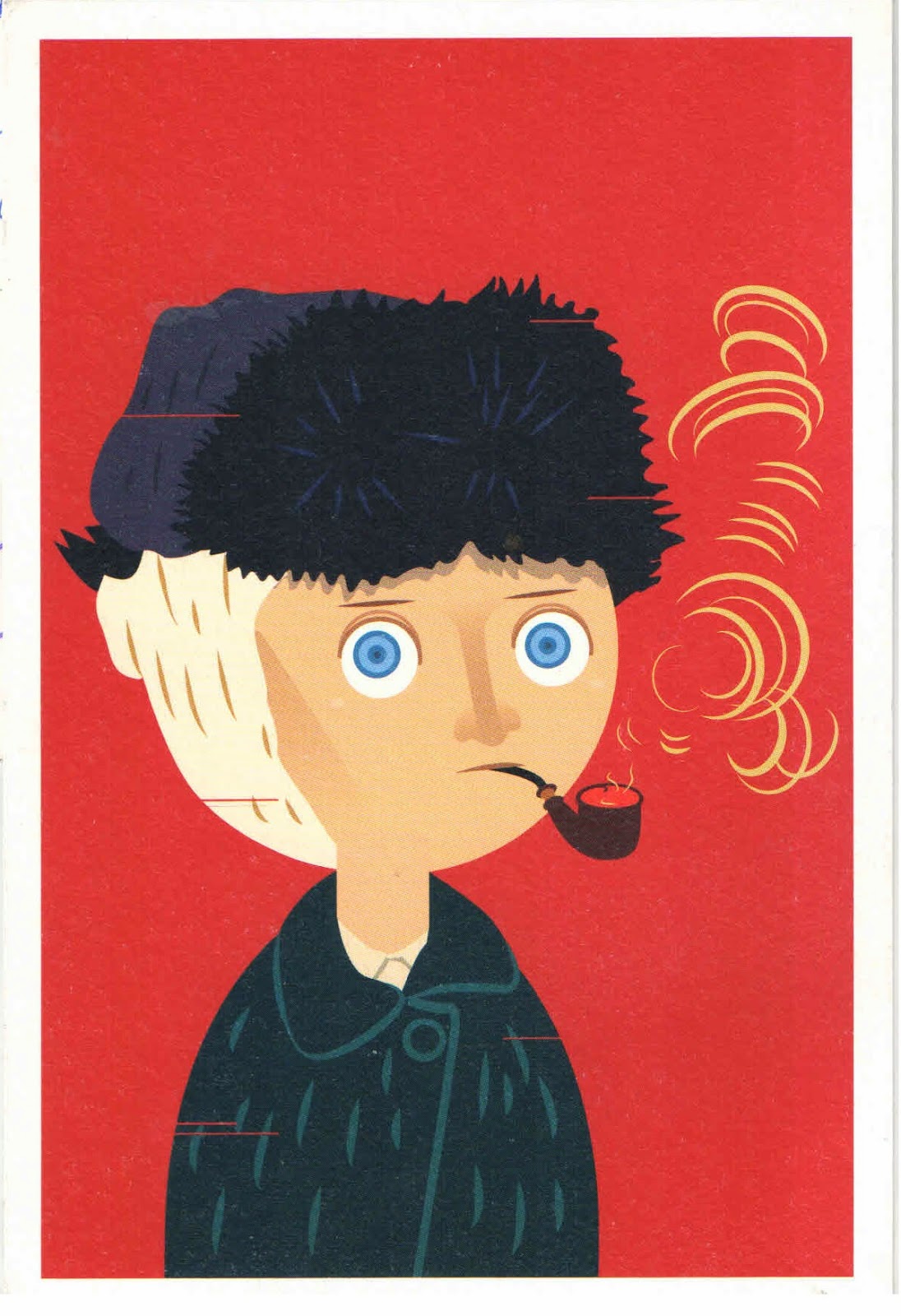
It has been months since Heewon and I wrote each other postcards. Random and unexpected things happened that caused sudden standstill of our postcard writing. Until one day, I received an e-mail message from her asking for an apology and if I changed my address. I got this postcard from her a few days letter. This is postcard is new beginning of many more beautiful postcards to come.

About the postcard, it shows a carricature of Vincent Van Gogh. He was a post-impressionist painter whose work, notable for its beauty, emotion and color, highly influenced 20th century art. He is considered the greatest Dutch painter after Rembrandt.

Thursday, 3 April 2014

Bukchon Hanok Village

Bukchon Hanok Village (북촌한옥마을)
29 Nov, 2013 | From Choonjong of South Korea
FACEBOOK SWAP

Bukchon Hanok Village is a Korean traditional village with a long history located between Gyeongbok Palace, Changdeok Palace and Jongmyo Royal Shrine. The traditional village is composed of lots of alleys, hanok and is preserved to show a 600-year-old urban environment. Now it is used as a traditional culture center and hanok restaurant, allowing visitors to experience the atmosphere of the Joseon Dynasty.

Hanok may look uncomfortable, but they are part of Korea's architectural tradition and have many points in their favor. Many of their most passionate enthusiasts and defenders live in Bukchon Hanok Village. To walk with an umbrella along a narrow hanok-lined street on a drizzly afternoon is to take a trip back in time.

Wednesday, 26 March 2014

Jeju, The Heaven's Present for us

Jeju Island
25 Oct, 2013 | From Dong Hwa of South Korea

Dong Hwa got this postcard during his business trip to Jeju Island.

Jeju Province is one of the nine provinces of South Korea. The province is situated on and coterminous with the nation's largest island of Jeju (also Jejudo; see Naming below), formerly transliterated as Cheju, Cheju Do, etc., or known as Quelpart to Europeans. The island lies in the Korea Strait, southwest of South Jeolla Province, of which it was a part before it became a separate province in 1946. Its capital is Jeju City.

The island contains the natural World Heritage Site Jeju Volcanic Island and Lava Tubes. Jeju Island has a temperate climate and even in winter, the temperature rarely falls below freezing point.

Wednesday, 19 March 2014

A street in Taiwan

Jiufen, Taiwan
6 Sept, 2013 | From Dong Hwa Park of South Korea
POSTCARD SEND FROM SOUTH KOREA

This is a photograph from Dong's recent trip in Taiwan last 2012. The photo was taken from one of the streets in Jiufen.

Jiufen, also spelled Jioufen or Chiufen, is a mountain area in the Ruifang District of New Taipei City near Keelung, Taiwan. Jiufen is a renowned tourist attraction representative of Taiwan. It draws many tourists from Taipei during the weekends.


A letter, postcards, and a bookmark


An envelope from South Korea
6 Sept, 2013 | From  Heewon of South Korea

Heewon, a friend from South Korea, sent me this envelope with a letter and some surprises enclosed. She sent me this bookmark which takes a form of a traditional Korean fan.

One of the postcards is of Jeonju. Jeonju is a city in South Korea, and the capital of North Jeolla Province. It is an important tourist center famous for Korean food, historic buildings, sports activities and innovative festivals.

The other postcard is a church from Jeon Dong. It is an historical area with Deoksu Palace from the Joseon Dynasty and some of Korea’s first modern schools and churches. It also home to contemporary museums, galleries and theaters along tree-lined streets and cobblestone alleyways.

Monday, 17 March 2014

Korean Architecture

Traditional Korean Roof
1 Jul, 2013 | From Dong Hwa Park of South Korea

This is another self-made postcard from Dong-Hwa from his photographs of Busan. This postcard is of a traditional Korean roof. Traditional Korean roof construction has traditionally used many kinds of natural materials. They are made of neowa (shingle), giwa (tiles), byeotjib (rice Straw), stone giwa (tiles), eoksae (eulalia) and goolpy (oak bark).

Hanok is a term to describe Korean traditional houses. Korean architecture lends consideration to the positioning of the house in relation to its surroundings, with thought given to the land and seasons.

Dong wrote in the letter that his dad have been to the Philippines, and he strongly recommends him to visit too.

Thursday, 13 March 2014

Joseon, South Korea

Sunset over Joseon
21 May, 2013 | From Heewon of South Korea

Here's another postcard from Heewon. 

Joseon was a Korean state founded by Taejo Yi Seong-gye that lasted for approximately five centuries, from July 1392 to October 1897. It was founded following the aftermath of the overthrow of the Goryeo Dynasty in what is today the city of Kaesong. Early on, Korea was retitled and the capital was relocated to modern-day Seoul. The kingdom's northernmost borders were expanded to the natural boundaries at the Amnok and Duman rivers through the subjugation of the Jurchens. Joseon was the last dynasty of Korean history and the longest-ruling Confucian dynasty.

Wednesday, 12 March 2014

Seokjojeon-Court Artifacts Museum, Seoul, South Korea

Seoul - Now and the Past
4 Apr, 2013 | From Heewon of South Korea

Heewon sent me this postcard showing the Seokjojeon-Court Artifacts Museum (Teoksu Palace). National Palace Museum of Korea is a national museum of South Korea located in Gyeongbokgung Palace, Seoul.

The museum first began as the "Korean Imperial Museum", which was established on September, 1908 and was originally located in Changgyeonggung Palace.

National Palace Museum of Korea houses over 40,000 artifacts and royal treasures, from the palaces of the Joseon Dynasty and the Korean Empire, of which 14 are National Treasures of South Korea.  It displays records, state rites, architecture, clothing, royal life, education, culture, paintings and music of the dynasty’s ruling era. It also has among its collection the royal seal of King Gojong of Joseon, which was used for his personal letters to Russian czar and Italian emperor after 1903. It disappeared during Japanese rule and was re-covered from a US-based Korean collector in 2009.

Another self-photographed postcard from Dong-Hwa

Centum City, Busan
1 Apr, 2013 | From Dong Hwa

This is my second postcard from Dong Hwa. He is fond of photography and makes his own postcards from the photographs he took from all over Busan and his travels. Really cool.

He lives in Busan which is his hometown. It is the second largest city of South Korea. It also the world's fifth largest port city as.

Tuesday, 11 March 2014

My first postcard from South Korea

A self-photographed postcard
13 Mar, 2013 | From Dong-Hwa

This is a self-photographed postcard of a sunset view at HwaMyong Bridge, Busan.

Dong Hwa also wrote a lot of things about himself - where he lives, his work, and his hobbies and interests. I really enjoyed reading his card.