Showing posts with label Malta. Show all posts

Monday, 2 June 2014

From Goran's Maltese vacation

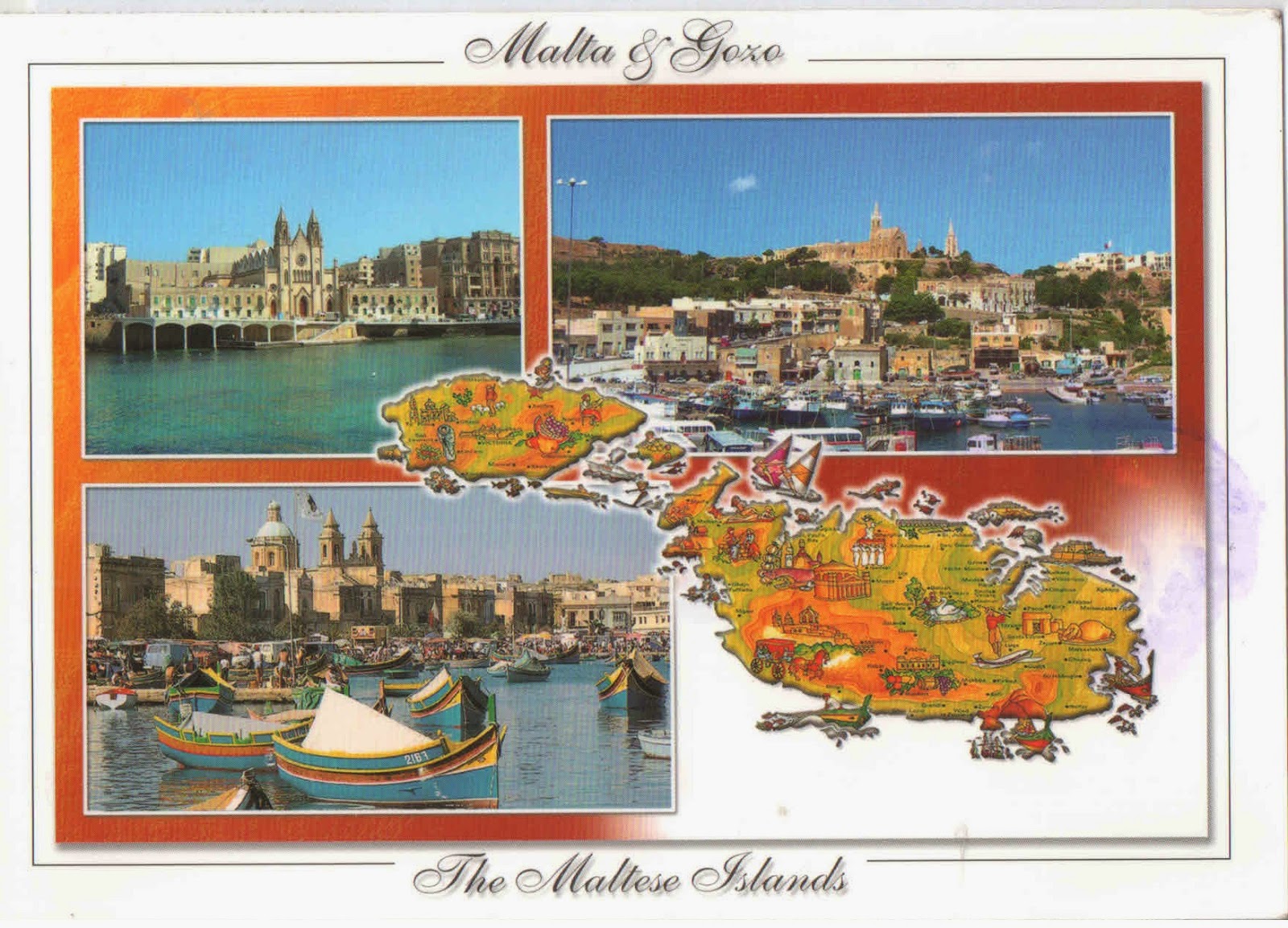
The Maltese Islands
28 May 2014 | From Goran of Macedonia 
POSTCROSSING FRIEND | POSTCARD SENT FROM MALTA

I got this postcard from Goran during his vacation in Malta. He shared that Malta is a country he fell in love with. Malta is a great place to visit for sea, sun, culture, and attractions.

Malta is a southern European country in the Mediterranean Sea. The country covers just over 316 km2 (122 sq mi), making it one of the world's smallest and most densely populated countries. The capital of Malta is Valletta. Malta is sometimes traditionally claimed to be an Apostolic see because, according to the Acts of the Apostles, Paul the Apostle was shipwrecked on Malta. Catholicism is the official religion in Malta.

Malta is a favoured tourist destination with its warm climate, numerous recreational areas, and architectural and historical monuments, including nine UNESCO World Heritage Sites.

Source: Wikipedia

Tuesday, 18 March 2014

My first postcard from Malta

Colorful Maltese balconies and doors in the City of Valletta
13 Aug 2013 | From Vitalija Stanislauskaite of Lithuania
POSTCROSSING SWAP | POSTCARD SENT FROM MALTA

Vitalija sent me this postcard during her brief stay in Malta.

Valletta is the capital of Malta. It is located in the central-eastern portion of the island of Malta. Valletta is the second southernmost capital of the EU member states after Nicosia.

Valletta contains buildings from the 16th century onwards, built during the rule of the Order of St. John of Jerusalem, also known as Knights Hospitaller. The city is essentially Baroque in character, with elements of Mannerist, Neo-Classical and Modern architecture in selected areas, though World War II left major scars on the city. The City of Valletta was officially recognised as a World Heritage Site by UNESCO in 1980.

The use of balconies were first introduced in the city of Valletta. This occurred in the last quarter of the 17th century as a result of the increasing influence of the baroque movement, of which the balcony was a favourite device, in Europe. This latter expanded to the old city of Mdina and the Cottonera area and finally came to the villages during the 18th Century.

Richly decorated balconies also served another purpose. One of the building regulations laid down by the knights for their new city was that blocks had to display some form of sculptural ornamentation at the corners.