Showing posts with label Peru. Show all posts

Sunday, 15 February 2015

Fruit Art

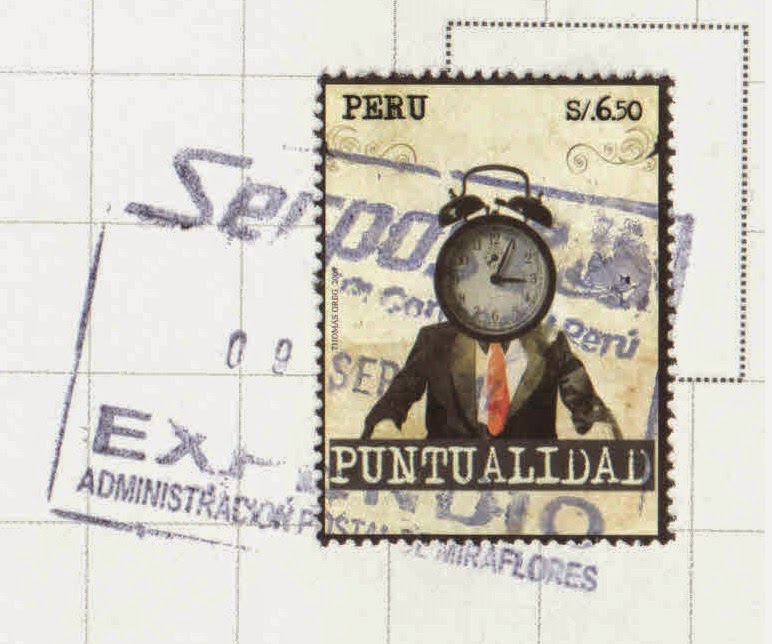
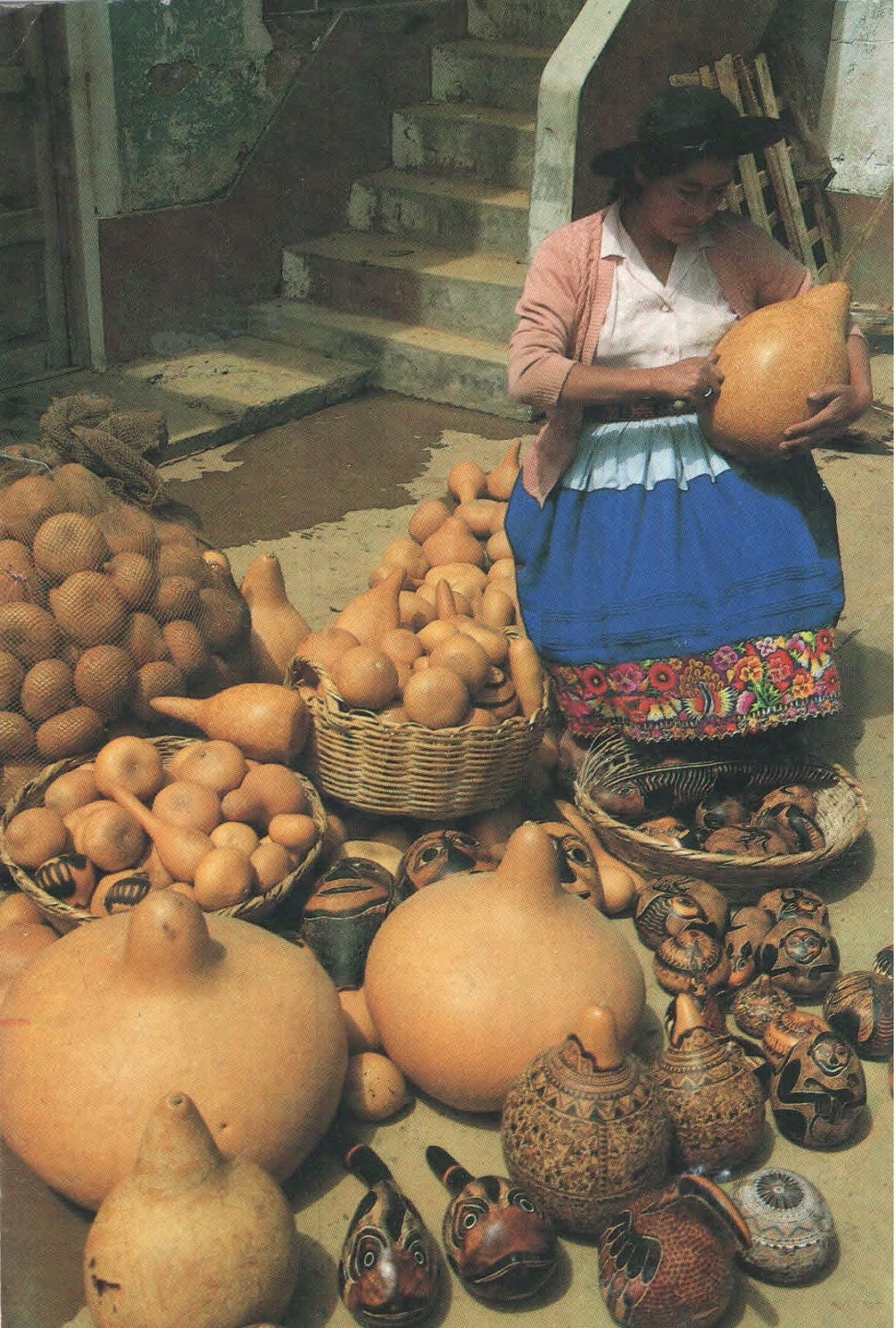
Mates Burilados
24 Nov 2014 | From Marcos of Peru
POSTCROSSING SWAP

The chiselled gourds are fruits made into ornate handmade pumpkin through a technique called burilado (an instrument called chisel), which are produced in Peru - in the Mantaro Valley in Lambayeque and the Province of Huanta.

The legendary bulgaris gourd, known as mate in Peru, is the basis of the fine art of the mate burilado. The oldest carved gourds date back 3,500 years and were found in the Huaca Prieta temple (Chicama Valley) on Peru's north coast.

In more recent times, this practice has boomed in the town of Huanta near Ayacucho, where artisans made the mates huantas. These gourds stand out for the vitality of the thick but steady lines, which etch out scenes of everyday life in the Andes.

Another variation is that of miniature drawings, which can only be made out with a magnifying glass. The technique involves etching fine lines into the gourd with a scalpel called a buril, creating a series of drawings that generally represent active scenes of farming life.

Wednesday, 5 November 2014

Historic Sanctuary of Machu Picchu

Machu Picchu
4 Oct 2014 | From Victor of Peru
POSTCROSSING SWAP

The Machu Picchu  is a 15th-century Inca site. Located in the Cusco Region, Urubamba Province, Machupicchu District in Peru, it is situated on a mountain ridge above the Sacred Valley. Most archaeologists believe that Machu Picchu was built as an estate for the Inca emperor Pachacuti (1438–1472). Often mistakenly referred to as the "Lost City of the Incas", it is the most familiar icon of Inca civilization.

The Incas built the estate around 1450, but abandoned it a century later at the time of the Spanish Conquest. Although known locally, it was unknown to the outside world before being brought to international attention in 1911 by the American historian Hiram Bingham. Since then, Machu Picchu has become an important tourist attraction. Most of the outlying buildings have been reconstructed in order to give tourists a better idea of what the structures originally looked like.

Machu Picchu was built in the classical Inca style, with polished dry-stone walls. Its three primary structures are the Inti Watana, the Temple of the Sun, and the Room of the Three Windows. These are located in what is known by archaeologists as the Sacred District of Machu Picchu.

Source: Wikipedia

Lineas de Nasca, Peru

Nasca Lines: The Flamingo
4 Oct 2014 | From Victor of Peru
POSTCROSSING SWAP

The Nazca Lines are giant figures of geometric patterns, animals, humans figures and thousands of perfectly straight lines on the desert floor situated nin the Nazca region, scattered over 500 square kilometers of an arid plateau between the Nazca River and Ingenio River. These exceptional collection of geoglyphs in the southern desert of Peru are designated as a UNESCO World Heritage SIte. They have been uner study for several years. However their real purpose are not yet discovered. Some suggest they are related to astronomy or ancient deities. Other goes as to saying they are created alien lifeforms outside the planet.

The flamingo  is the longest figure on the desert, with over 300 meters. Accordingly the beak of this bird points towards the place where the sun rises every year on winter solstice. The exceptionality of these geoglyphs rest in the fact that they can only be seen from the air.

Wednesday, 15 October 2014

My first postcard from Peru

Images of Machupicchu
26 Sept 2014 | From Vanessa of Peru
POSTCROSSING SWAP

This postcard seems nostalgic. I have always known about Machupicchu since I was a kid. There is a small picture of Machupicchu posted in my bedroom wall. I remember always being fascinated by it and hopes to see it one day - not just through a picture on my wall.

Machupicchu is arguably the most famous of all the archaeological sites in South America. The most-visited tourist destination in Peru, these mysterious ruins are believed to be the residence for resting and relaxation of the Inca and the elite. The Incan built structure has been deemed the “Lost Cities”, unknown until its relatively recent discovery in 1911. Due to it’s isolation from the rest of Peru, living in the area full time would require traveling great distances just to reach the nearest village.

Machpicchu is is located in the Cusco Region, Urubamba Province in Peru. Vanessa describes Cusco as an amazing city. It is a fascinating city that was the capital of the Inca Empire. Cuzco is a Unesco World Heritage Site and is one of Peru's most visited cities.